Paper first
The main learning happens away from the screen. Kids read, think, write, and engage — before a device is involved.

HSEA was not built by a company or a startup. It was built by a homeschool family — a father of three who homeschools his own children, believes screens are overused in education, and spent years building the structured, paper-first curriculum he could not find anywhere else.
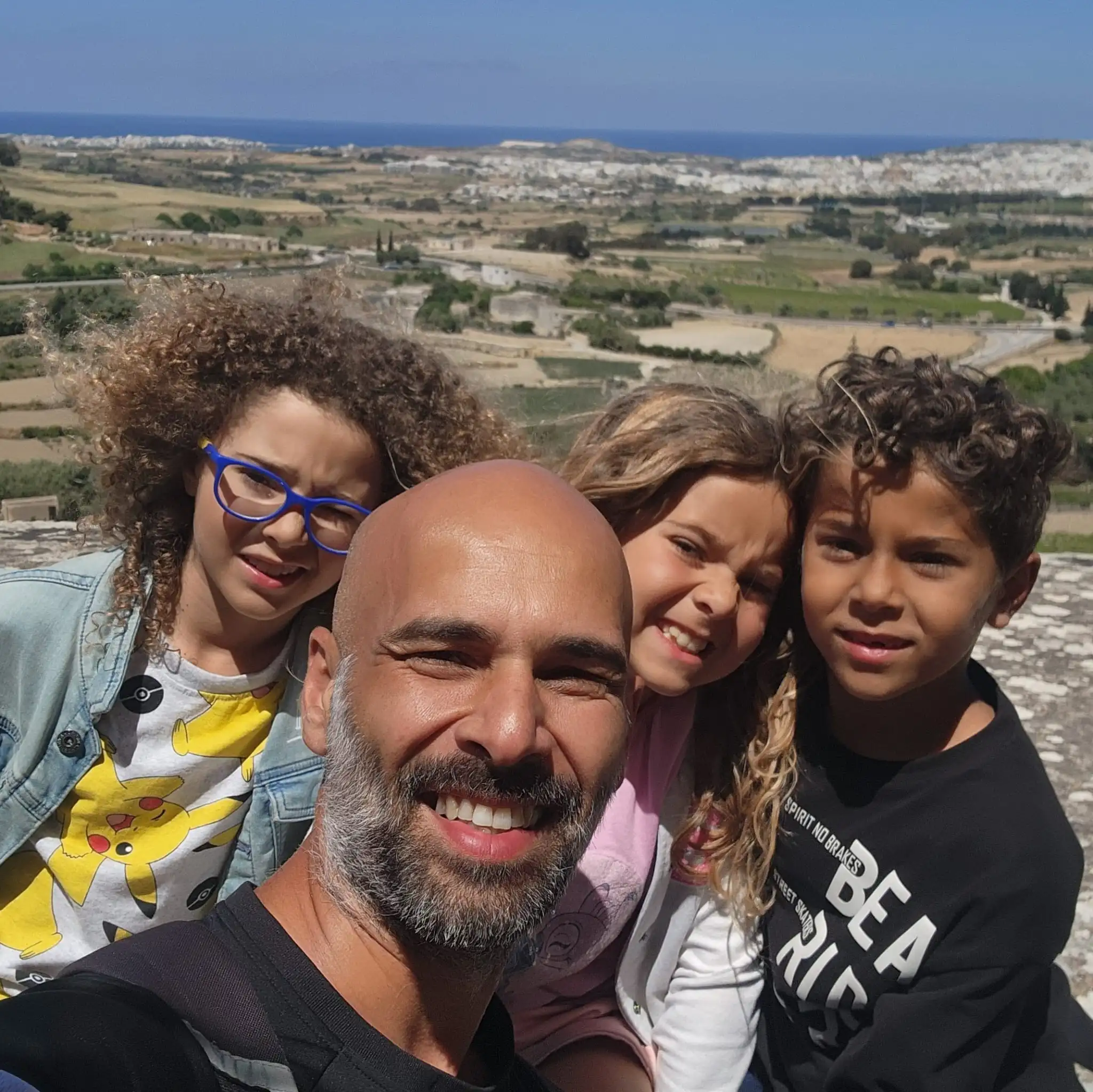
I'm a homeschool father of three, and from the very beginning I knew: school was not for us. Not because I do not care about education — but because I care too much.
I went through school myself. I know what it feels like. Hours on a hard chair. Waiting for the bell. Being told to stop talking, stop moving, stop being a child. I was often yelled at — not guided, not supported — just told to obey. Eventually I left. I was 16. Exhausted, frustrated, and done.
Leaving school did not mean I stopped learning. It meant I finally started.
I began learning on my own — at my own pace, following my own curiosity. For the first time, I actually enjoyed it. No noise. No pressure. No shame. Just focus and the freedom to think.
When my children were born, the question was never which school — it was how do I give them something better. So I kept them home. All three of them. From the very beginning.
If your child spends 7 hours a day in school plus commute, how many real hours are left with you? In those early years — who is actually raising your child?
At home, I teach my kids for about 90 minutes a day. That is all. Because when learning is focused, calm, and personal — it does not need to take all day. The rest of the time they play, explore, and enjoy being children. And yes, they still learn. A lot.
My kids are not afraid to speak up. They are not afraid to make mistakes. They ask questions all day — and I take the time to answer them. Because I am not just teaching. I am present.
A deliberate choice. Not a limitation.
When I started building HSEA, every learning platform I looked at had the same model: screens first, all day, every day. Click here. Watch this. Tap that. Earn a badge. Move on.
I watched my own children use those platforms. They moved fast. They clicked quickly. They looked productive. But the next morning, they could not remember what they had done. The learning was shallow because the thinking was shallow. They were responding to prompts — not learning.
Clicking is not thinking. Tapping is not writing. Fast completion is not understanding.
I am not against technology. I use it myself every day. But I believe screens should never be where teaching happens. The lesson belongs on paper, with the parent at the table. The screen has one job in HSEA: a 10-minute review the next morning of yesterday's lesson. That order matters. Paper teaches. Screen reviews. It changes everything.
The main learning happens away from the screen. Kids read, think, write, and engage — before a device is involved.
90 minutes a day is enough when learning is calm, intentional, and well-structured. Not 6 hours of passive screen time.
7 subjects including Tech and SEL — because the world your child is entering requires more than just reading and math.
Not because I had all the answers. Because I lived the journey and could not find what I needed.
When I started homeschooling, I looked for a curriculum that was structured but calm, paper teaches, screen reviews the next morning, complete but not overwhelming. Something that removed the guesswork every morning.
I also wanted a curriculum that reflected the world my children are actually growing up in — not just math and reading, but technology literacy, social-emotional skills, science, and global awareness. Most homeschool materials I found felt outdated. Tech and SEL were not even on the list.
So I built it myself. Lesson by lesson. Grade by grade. Every subject. Every step. A system any parent can follow — even without a teaching background.
280 lessons per grade. 7 subjects: Reading, Writing, Math, Science, Social Studies, SEL, and Tech.
Members print any lesson with one click — clean, no clutter. Save as PDF for binders or offline use.
After paper practice, interactive activities confirm understanding and save progress per child. Short. Intentional. Not a replacement for thinking.
Every child is remarkable. Not every child fits a system — and they should not have to.
You do not have to be a trained teacher to do this. You just have to show up — with patience, presence, and a willingness to learn alongside your child. Kids do not need perfect parents. They need connected ones.
If you are here, you already care. That is the most important part. The curriculum is ready. The method is simple. Let us do this together.
— The HSEA founder
A homeschool dad of three · Homeschool Education Academy